
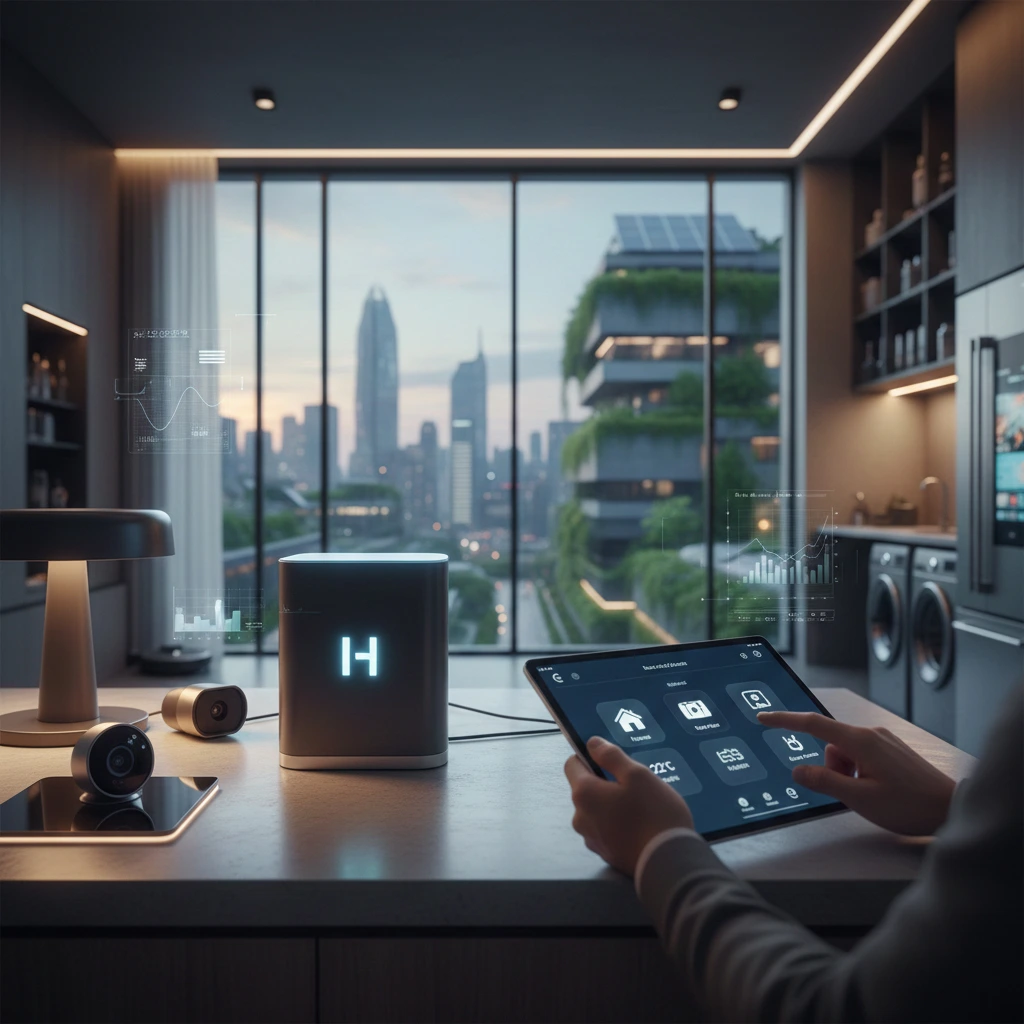
The concept of “home” has undergone a radical transformation over the past decade. Once perceived merely as a physical shelter, living spaces have evolved into dynamic ecosystems where technology is seamlessly integrated—systems that learn user habits and simplify daily life.
Today, smart home systems are no longer considered a technological luxury, but rather a comfort and security standard required by modern urban living. So how are these technologies integrated into our living spaces, and how do they enhance real estate value?
The Digitalization of Comfort: Automation and Lifestyle Scenarios
When smart home technologies are mentioned, practical solutions that make life easier are usually the first to come to mind. However, this concept goes far beyond remote control of devices; the real transformation lies in redefining the relationship between space and people.
In the past, individuals adapted to the physical limits of their homes. Today, living spaces have become flexible environments that adapt to the user’s needs, routines, and daily rhythms. This new residential approach—saving time during busy mornings and offering relaxation after long days—enables modern urban residents to manage their most valuable asset, time, more efficiently. A home is no longer just four walls; it becomes a dynamic living partner aligned with one’s lifestyle.
Three key pillars define today’s modern smart home concept:
-
Energy Management and Sustainability: Smart thermostats and lighting systems detect occupancy and prevent unnecessary energy consumption. Systems that lower heating when you leave home and optimize lighting based on daylight reduce both carbon footprint and energy costs.
-
Advanced Security: Keyless entry systems, remotely accessible cameras, and water/gas leakage sensors make security proactive. Your home alerts you the moment a potential risk arises.
-
Personalized Scenarios: Single-command scenarios such as “Welcome Home” or “Cinema Mode,” where curtains close, lights dim, and temperature adjusts automatically, are among the most impactful factors enhancing quality of life.
How Can Smart Systems Be Integrated into Existing Homes?
Making a home smart does not necessarily require intervention during construction. Thanks to advanced wireless technologies, existing residences can easily be transformed into smart ecosystems.
-
Wireless Protocols: Devices using wireless communication protocols such as Zigbee or Z-Wave can be integrated into existing electrical infrastructure without invasive construction work.
-
Modular Onboarding: It is possible to start with a smart lock, smart plugs, or a thermostat and gradually expand the system. The key is selecting the right hub (central control unit) that ensures seamless device interoperability.
-
Voice Assistant Integration: Voice control via Siri, Alexa, or Google Assistant makes technology invisible and effortless.
-
Efficiency Through Smart Appliances: Major energy-consuming appliances are central to this transformation. Next-generation IoT-enabled refrigerators, washing machines, and dishwashers analyze user behavior to optimize operation, shift usage to off-peak tariff hours, and provide predictive maintenance alerts—reducing energy waste and extending appliance lifespan.
The Impact of Smart Homes on Real Estate Value
Real estate data indicates that properties equipped with smart home infrastructure achieve higher valuations and change hands more quickly than standard homes. For investors and homeowners alike, smart systems represent not only daily comfort but also a strategic investment that preserves long-term asset value.
At Koray GYO, we prioritize infrastructure solutions that address not only today’s expectations but also the needs of the future. Because we believe that true luxury is a lifestyle where technology integrates seamlessly into daily life—saving time and enhancing comfort.